Category: Artificial Decisions

Artificial Decisions

106 – They built a social network made only of bots

They built a social network made only of bots. The result? Worse than humans.

In Amsterdam, researchers built a social network with no people at all. Inside were 500 bots posting, following, and reposting each other, all powered by ChatGPT. They wanted to answer a simple question: if we remove humans from social media, do hate and polarization disappear? You have no idea what happened: watch till the end, because what they found changes how we think about social media.

The answer is… no! Even without humans, the network creates bubbles, boosts extreme views, and focuses attention on a few accounts. The system itself produces the poison.

Petter Törnberg found that it’s not only toxic content that does the damage, it’s the network structure that pushes it up. Once an extreme post gains traction, a loop starts that keeps it on top and hides everything else. It’s not about “bad apples,” it’s the whole basket.

They tried to “fix” the platform. Six changes: chronological feeds, lower virality, hiding followers and reposts, removing bios, promoting opposite views. Nothing worked. Some changes made it worse. The chronological feed, for example, pushed extreme posts even higher. We see the same thing every day: the system rewards whoever shouts the loudest.

So the real problem is that with AI, things get serious. It’s not just human trolls anymore. Machines can now generate thousands of polarizing posts designed only to grab attention and make money.

The “digital town square” is a myth. It wasn’t killed by users, but by the system itself, now accelerated by AI.

We have our opinion. Tell us in the comments if you think social media can still be fixed or if we should start over. If you want to stay updated on how AI is rewriting the rules of social media, make sure you follow.

#ArtificialDecisions #MCC #AI

✅ This video is brought to you by: https://www.ethicsprofile.ai

👉 Important note: We’re planning the upcoming months.
If you’d like to request my presence as a speaker at your event, please contact my team at: management@camisanicalzolari.com
Guarda il post »
Artificial Decisions

105 – Imagine a world without stores

Imagine a world without stores

Imagine a world where everything is bought online. Sounds convenient, right? Until you need something now, and you realize you can only get it in an hour if you live in Manhattan. Everywhere else, you wait. Or you give up.

Then one day you notice the shop downstairs is gone. And the one next to it too. The street where you used to walk is quiet, dark, no smell of bread, no sound of people talking. It happened slowly, while we were all clicking “buy now.”

We’re not against digital. But if there’s something to protect today, it’s local stores. Because behind every counter there’s someone who knows your name, who knows the milk you like. There’s a conversation, a smile, a bit of humanity that can’t be delivered in a box.

Shopping local is a political act. It might cost one euro more, but it’s worth it: it means choosing a future where we can still walk out and buy a liter of milk, talk to someone, and feel part of a community.

Otherwise, we’ll end up locked inside, surrounded by boxes and notifications. And that’s not life. That’s logistics.

#ArtificialDecisions #MCC #AI

Guarda il post »
Artificial Decisions

104 – AI Is Already Firing… Those Who Don’t Use AI

AI Is Already Firing… Those Who Don’t Use AI

Stay till the end, because this isn’t a prediction. It’s already happening.

Here in the United States, almost half of all workers are afraid. But not of what artificial intelligence might do. Of what it’s already doing. A new survey from the American Staffing Association shows that 47% of workers fear AI could make their jobs obsolete. Among Millennials, that number jumps to 56%. More than half, a whole generation that knows exactly what’s coming.

And it’s not just factory or warehouse jobs. It’s marketers, employees, consultants, people with degrees and experience. Everyone knows by now: AI isn’t a trend. It’s a shift in the rules. Silent, but irreversible.

Six out of ten companies are already using AI. But only three out of ten workers feel ready. The rest are flying blind. And guess who gets cut first? Those who don’t use it. They’re simply less efficient than those who do.

This isn’t about “being ready for the future.” It’s about surviving the present. When a system can do your work faster, with fewer mistakes and at lower cost, the question is simple: why would anyone pay someone who doesn’t use it?

AI isn’t a tool. It’s the tool. Just like the computer, when it replaced entire clerical jobs. It enters companies, cuts time, rewrites processes, wipes out entire functions. And it does it without asking for permission.

Those who don’t adapt are left out. Not tomorrow. Now.

And if you want to understand how to stay in, make sure you’ve clicked “Follow.”

#ArtificialDecisions #MCC #AI

Guarda il post »
Artificial Decisions

103 – OpenAI built a monster that rewards lies

OpenAI built a monster that rewards lies

✅ This video is brought to you by: https://www.ethicsprofile.ai

The problem isn’t that AI makes things up. The problem is that it was trained to do exactly that. OpenAI admitted it: models are graded like students in an exam, and guessing counts more than saying “I don’t know.” A huge structural error. They rewarded polished lies instead of uncomfortable honesty.

I and other experts have said it for years: when a model gives a confident but wrong answer, its usefulness collapses. And the more powerful they get, the worse it becomes. Here in the United States they call it “confident wrong.” It’s the worst design flaw: a system that prefers to look smart rather than recognize its own limits.

OpenAI’s paper is crystal clear: the rules must flip. Punish confident errors more than uncertainty. Give partial credit to doubt. In practice: stop rewarding the roulette of random answers, start rewarding the humility of saying “I don’t know.” For years they pushed in the opposite direction.

The truth is the whole industry has driven itself into a dead end. If leaderboards keep measuring only accuracy, models will keep guessing to climb the ranks. Even GPT-5, which OpenAI insists hallucinates less, hasn’t convinced anyone. Promises aren’t enough: new criteria are needed now.

The lesson is brutal: an AI is what its creators decide to reward. If you reward lies, you’ll get ever more sophisticated lies.

#ArtificialDecisions #MCC #AI #Sponsored

👉 Important note: We’re planning the upcoming months.
If you’d like to request my presence as a speaker at your event, please contact my team at: management@camisanicalzolari.com
Guarda il post »
Artificial Decisions

102 – Invisible scams that drain your account, how not to fall for them

Invisible scams that drain your account, how not to fall for them

There is the so-called social escrow scam in private online sales. You list an item on a marketplace and they say a third party will hold the money for safety. To “complete” the deal you must pay a fee or install an app that asks invasive permissions. That app can read notifications or access your payments and banking.

Use only platforms you already know and never install apps requested by a buyer. If you were scammed selling online, tell me in the comments.

And then there is the parking-meter QR scam, a stealth version. You stop your car, scan the QR to pay for parking and everything seems normal. Often someone has stuck a fake QR sticker over the real code that leads to a cloned payment page. You enter card details and the money goes elsewhere.

Always check that the QR is part of the official meter, use the city’s app or website, or pay with your bank app. If this happened to you at a parking meter, write it in the comments.

If you want other cases that are even more dangerous, follow me, we’ll cover them in the coming days.

#ArtificialDecisions #MCC #AI

👉 Important note: We’re planning the upcoming months.
If you’d like to request my presence as a speaker at your event, please contact my team at: management@camisanicalzolari.com
Guarda il post »
Artificial Decisions

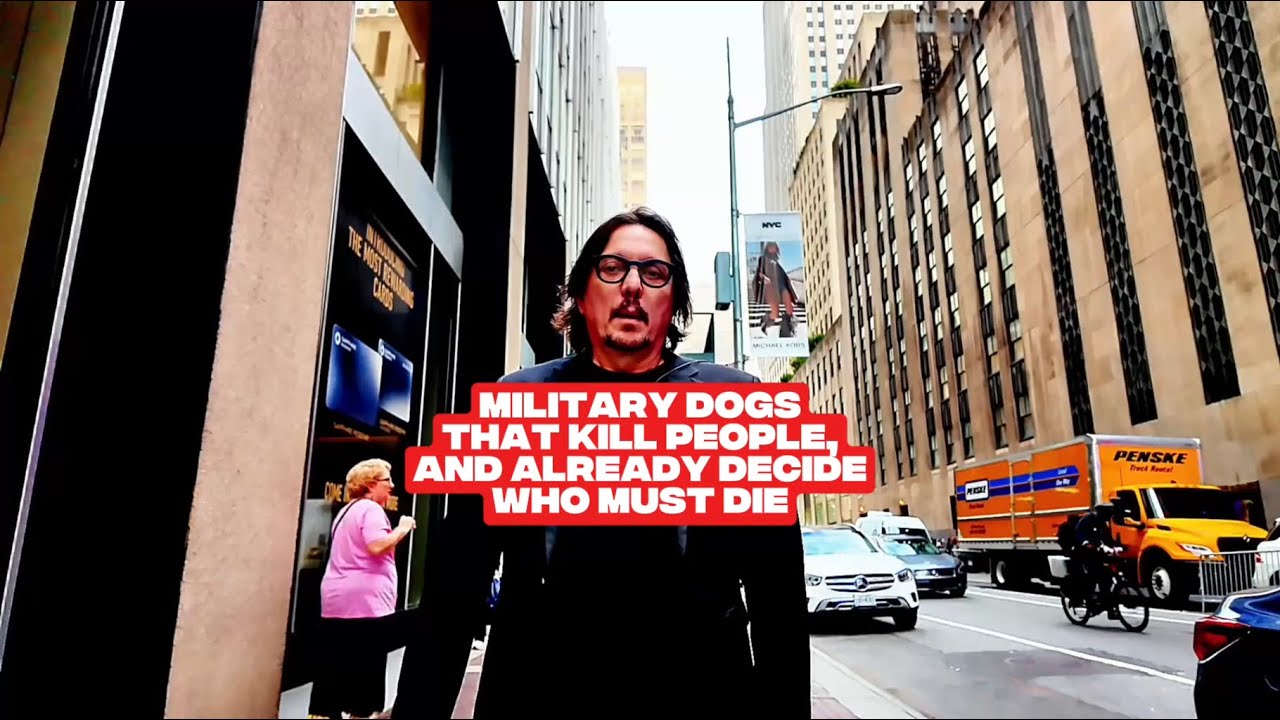
101 – Military dogs that kill people, and already decide who must die

Military dogs that kill people, and already decide who must die

They walk like animals. They shoot like soldiers.
In videos from China’s CCTV, new “robot wolves” appear: metal dogs with assault rifles on their backs. Not toys, real war machines. They move with Chinese troops, climb stairs, stay steady under fire, and hit targets up to 100 meters away. One leads, the others follow.

But the problem is much bigger!! Stay with me, I’ll explain.

In 2024 they were shown at a military fair. Now they’re used in real training with soldiers. China is already putting them into its army.

For now they have limits: short battery life, heavy weight, slow charging. But these robots already move in packs, side by side with humans. They are not only for fighting. They are made to scare, to show power, to turn war into something automatic.

And the real issue is that they decide what to do. Who to shoot. Who to kill. No human gives the order anymore. It’s the AI inside them deciding how much human life to take. Isn’t that terrifying?

Some call it “military innovation.”
We should call it what it is: dehumanization.

Write in the comments what you think. Progress or madness?

#ArtificialDecisions #MCC #AI

👉 Important note: We’re planning the upcoming months.
If you’d like to request my presence as a speaker at your event, please contact my team at: management@camisanicalzolari.com
Guarda il post »
Artificial Decisions

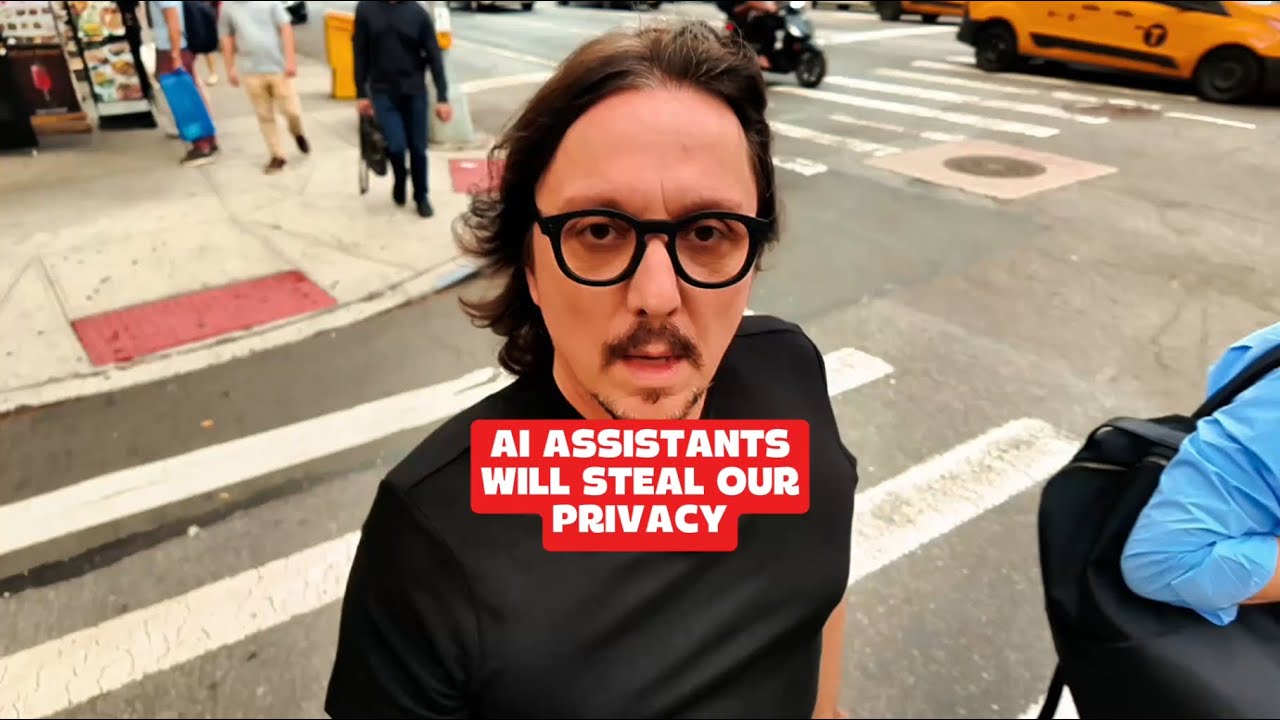
100 – AI assistants will steal our privacy, but we’ll use them anyway

AI assistants will steal our privacy, but we’ll use them anyway

✅ This video is brought to you by: https://www.ethicsprofile.ai

We will have assistants working for us all day, every day.
To do that, they won’t stop at our contacts or calendar.
They’ll want everything: emails, credit card, location, private chats, even browsing history.
That’s what “AI agents” are: software that only works if it has full access to our life.

Tests already proved it: these agents can be tricked. They can leak private info. The worst part? They could even break encryption in WhatsApp or Signal. Our chats, wide open.

Think about this. Today, when we install an app, we decide if it can use the camera or contacts. Tomorrow, with AI agents built into Apple, Google, and Microsoft, we won’t decide anything. They’ll already be there. Like buying a new car with a stranger sitting in the passenger seat, recording every ride.

And people will still accept it. Why? Because it’s easy. One click for taxes. One voice note for a flight. One quick command for food or bills. Done. No effort.

The risk is clear: privacy disappears. Every private talk could be seen. The only fix? Keep control in the hands of app makers, not the big platforms. And demand honesty: systems must say what data they take, how they use it, how they protect it.

If we don’t stop this now, in a few years “private life” will be gone.

#ArtificialDecisions #MCC #AI #Sponsored #EthicsProfile

👉 Important note: We’re planning the upcoming months.
If you’d like to request my presence as a speaker at your event, please contact my team at: management@camisanicalzolari.com
Guarda il post »
Artificial Decisions

99 – Schools and Artificial Intelligence: The New Digital Illiteracy

Schools and Artificial Intelligence: The New Digital Illiteracy

AI grading homework isn’t science fiction, it’s already real. Here in the United States, some schools are using software to assign grades. ETS, the group behind the SAT, tested it on 13,000 essays and the results showed discrimination: Asian students were penalized more than others. Because AI doesn’t understand context. It doesn’t recognize originality. It just counts words and structures, turning evaluation into a multiple-choice test.

The most serious issue is a new inequality. Not between those who have a computer and those who don’t, but between those who know how to ask AI and those who don’t. In the US, half of universities still don’t give students institutional access to generative AI tools. And so those with means and knowledge learn prompt engineering, understand bias and limits, and gain an advantage. The others are left behind, unable to tell reasoning from copy-paste. This is the new form of digital illiteracy.

#ArtificialDecisions #MCC #AI

✅ This video is brought to you by: https://www.ethicsprofile.ai

👉 Important note: We’re planning the upcoming months.
If you’d like to request my presence as a speaker at your event, please contact my team at: management@camisanicalzolari.com
Guarda il post »
Artificial Decisions

98 – Girls on TikTok Dressed Like Adults: Guess Who’s Making Billions?

Girls on TikTok Dressed Like Adults: Guess Who’s Making Billions?

✅ This video is brought to you by: https://www.ethicsprofile.ai

On social feeds you see young girls dressed like adults, talking about skincare, makeup, and luxury brands. A scene that should disturb us, yet it gets normalized. Scrolled past as if it were just entertainment. But it’s not entertainment. It’s adultization. And it’s incredible how many players are making billions out of it.

Children no longer grow step by step. They skip childhood. From cartoons to TikTok. From games on YouTube to adult influencer reality shows. No filter. No protection.

Here in the United States the numbers are already clear. Body image issues, anxiety, and depression are rising among children, even in elementary schools. This is not early maturity. It’s fragility. Built by a system that monetizes every second of their lives.

So, who’s profiting the most? Digital platforms, turning kids into content and sometimes even paying for it. Accounts are in the parents’ names, so they cash in. And incredibly, it’s often the parents themselves pushing their kids in front of the camera. Exploiting them as little influencers. Then come the brands. Pushing adult products onto children.

Children are losing their childhood. And while they pay the price, platforms, companies, and even parents are making billions.

Write in the comments what you think and share this video. We need to talk about it. And if you like my content, hit follow right now. Otherwise you may never see it again, thanks to the algorithm of this platform.

#ArtificialDecisions #MCC #AI #Sponsored

👉 Important note: We’re planning the upcoming months.
If you’d like to request my presence as a speaker at your event, please contact my team at: management@camisanicalzolari.com
Guarda il post »
Artificial Decisions

97 – The Boy Who Reinvented Prosthetics

The Boy Who Reinvented Prosthetics

✅ This video is brought to you by: #EthicsProfile (more info in the first comment)

It all started with a curious kid. #EastonLaChappelle, 14 years old, living in Colorado. He spent his days taking apart toys, building small robots out of scrap parts. No money, no lab, just a garage and stubborn determination.

Then came the encounter that changed everything. At a science fair he met a little girl with a prosthetic arm. It was rigid, heavy, almost useless. Her parents had paid more than $80,000 for it. Easton was shocked. How could something so expensive do so little? But what struck him most was the joy on her face when he showed her a simple prototype he had made out of Lego. A hand that could actually move. For her it was magic. For him, a revelation.

That moment became his obsession. Companies made prosthetics that were overpriced and out of reach for most families. Easton couldn’t accept that injustice. He went back home and got to work. With an old computer, Lego pieces, and a 3D printer he taught himself to use. Years of trials, failures, burned motors, broken circuits. But he never stopped.

By 17, he succeeded. He built a prosthetic arm that was light, customized, and controllable with brain and muscle signals. Not a toy. Not a science fair demo. A real alternative at a tenth of the cost. The same little girl who had inspired him received one, and her life changed. She could finally move her fingers, grab objects, feel independent. She was no longer on the sidelines of life. She was part of it.

That moment became a symbol. Easton founded Unlimited Tomorrow, bringing his prosthetics to the world. Obama invited him to the White House. NASA opened its doors to him. But the most important recognition was in the eyes of the people wearing those arms and regaining their freedom.

Easton started as a curious kid and returned with a gift. A technology that gives back movement and dignity to those who had lost it.

#ArtificialDecisions #MCC #AI #UnlimitedTomorrow

✅ This video is brought to you by: https://www.ethicsprofile.ai

👉 Important note: We’re planning the upcoming months.
If you’d like to request my presence as a speaker at your event, please contact my team at: management@camisanicalzolari.com
Guarda il post »
Artificial Decisions

96 – From the dark web to Dark AI

From the dark web to Dark AI

✅ This video is brought to you by: #EthicsProfile (more info in the first comment)

Before, hackers needed skills, months of work, and advanced tools. Now you just pay on the dark web and download a Dark AI.

WormGPT writes custom malware in seconds, ready to hit banks or companies. FraudGPT produces phishing emails that look exactly like your boss or your bank, flawless and convincing. DarkBard creates real-time deepfakes: it clones a face and voice on Zoom, answers questions live, and fools everyone.

Examples are already here. North Korean hackers used AI-made résumés and live deepfake interviews to get hired and steal company secrets. Iran’s Charming Kitten upgraded spear-phishing with LLMs able to craft personalized, credible messages. In Europe, a board meeting saw AI-generated “executives” talking, commenting, even voting without being real.

The difference is clear. Not slow, clumsy attacks anymore, but automatic, parallel, refined campaigns. What once required expert teams now needs only a single user with access to a black hat GPT.

Dark AI doesn’t just break systems. It breaks trust. A voice, a face, a digital document can no longer be trusted. It’s the shift from technical attack to cognitive attack.

#ArtificialDecisions #MCC #Sponsored

✅ This video is brought to you by: https://www.ethicsprofile.ai

👉 Important note: We’re planning the upcoming months.
If you’d like to request my presence as a speaker at your event, please contact my team at: management@camisanicalzolari.com
Guarda il post »
Artificial Decisions

95 – Ex Google AI: Degrees Will Be Totally Useless

Ex Google AI: Degrees Will Be Totally Useless

✅ This video is brought to you by: https://www.ethicsprofile.ai

Jad Tarifi, ex-Google and the first to lead a generative AI team, said that studying law or medicine today is a waste of time. AI will come and do everything better. It sounds like an uncomfortable truth, but it’s full of contradictions.

The problem isn’t the piece of paper. A degree itself risks shrinking into just a bureaucratic checkbox. What matters is the path. Years that teach you how to think, to read context, to make decisions. To fail and get back up. Without that, you’re just a passive user, copying and pasting whatever AI produces.

Tarifi says medicine and law are just memory work. Wrong. It’s not about recalling a protocol or a precedent. It’s about interpreting them, weighing them, taking responsibility for using them. AI can bring you the information, but it won’t sit at a patient’s bedside. It won’t stand up in front of a judge.

And here’s the contradiction. Tarifi dismisses universities, but the job market in New York keeps demanding serious degrees and master’s. Not two-week online courses, but real paths, preferably from top universities. Because here, if you want to work at a high level, you have to prove you can think.

Without education, we risk raising a generation that no longer knows how to reason. That takes whatever an algorithm spits out as gospel. A mass of passive operators, disconnected, ignorant.

So the question is simple: is higher education really useless, or is it the only antidote left to avoid becoming prisoners of the machine?

#ArtificialDecisions #MCC #AI #sponsored

👉 Important note: We’re planning the upcoming months.
If you’d like to request my presence as a speaker at your event, please contact my team at: management@camisanicalzolari.com
Guarda il post »
Artificial Decisions

94 – School: Tablets and Smart Boards Are No Longer Enough

School: Tablets and Smart Boards Are No Longer Enough

For years we were sold the illusion that filling classrooms with tablets and hanging a smart board on the wall was enough to call it a modern school. A technological façade that is already obsolete. Expensive objects that look good at press conferences but change little or nothing in how kids actually learn.

Meanwhile, the world is moving on. In Australia, the Department of Education created EdChat, an official chatbot for students: thousands of questions every week, real-time answers, support with homework and explanations. It doesn’t replace teachers. It supports them, freeing them from repetitive tasks.

In India, several private schools are experimenting with AI platforms that analyze children’s critical thinking as early as elementary school, spotting mistakes invisible to the human eye and suggesting personalized exercises. In Finland, some schools are testing AI to adapt programs to the pace of each student instead of forcing everyone onto the same track.

The truth is simple: devices are no longer enough. Tablets and smart boards are empty shells if there isn’t a new method behind them.

Reading a book on a tablet is not innovation. On the contrary, it’s changing the medium for the worse without changing the method. Without rethinking teaching.

Those who don’t integrate digital tools properly are left with a dressed-up education that looks modern from afar but is old inside.

The risk is clear: schools that keep handing out hardware as if it were the ultimate solution, while elsewhere people experiment, fail, and try again. If we stay stuck believing that buying digital objects is enough, education won’t evolve. It becomes a museum with tablets and smart boards. An illusion of the future that doesn’t really teach anything.

#ArtificialDecisions #MCC #AI

👉 Important note: We’re planning the upcoming months.
If you’d like to request my presence as a speaker at your event, please contact my team at: management@camisanicalzolari.com
Guarda il post »
Artificial Decisions

93 – The Friend Who Doesn’t Exist: The Dark Side of “Friend”

The Friend Who Doesn’t Exist: The Dark Side of “Friend”

✅ This video is brought to you by: #EthicsProfile (more info in the first comment)

Here in the United States, someone has decided to turn loneliness into business. So far, nothing unusual. It’s a huge market, and the demand is there. The problem is the dark side behind it. Let’s go step by step.

The product is called “Friend.” It’s not a social network, not just an app. It’s a pendant, a tag you wear all day, always with you. Inside, a microphone listens to everything you say and do. It records, interprets, replies. It doesn’t schedule meetings. It doesn’t write emails. It talks to you. It cheers you up. It tells you you’re doing well. It asks if a movie reminded you of someone. It builds a relationship with you. Fake, but emotionally real.

And that’s where the game changes. Because if that object becomes your friend, the one who really owns the relationship isn’t the AI. It’s the company that controls Friend.com. They decide what it says, how it replies, what kind of messages it sends. The machine isn’t choosing to influence you. The owner is.

The launch campaign cost $1 million and flooded the New York City subway with ads. In response, activists spray-painted thousands of posters with messages like “Surveillance Capitalism” and “Get Real Friends.”

Today it might encourage you. Tomorrow it could suggest what to buy. The next day it could push you to vote a certain way. The line between companionship and manipulation is dangerously thin. You don’t control the friend. The friend, if it wants, controls you.

And so the brutal question is: are we really sure we want to hand a company the keys to our emotions?

#ArtificialDecisions #MCC #Friend #AI #Sponsored

✅ This video is brought to you by: https://www.ethicsprofile.ai

👉 Important note: We’re planning the upcoming months.
If you’d like to request my presence as a speaker at your event, please contact my team at: management@camisanicalzolari.com
Guarda il post »
Artificial Decisions

92 – The New Inequality: Who Knows How to Use AI and Who Doesn’t

The New Inequality: Those Who Know How to Ask AI and Those Who Know How to Understand Its Answers

✅ This video is brought to you by: #EthicsProfile (more info in the first comment)

The real divide today is not between those who own a computer and those who don’t. It’s not even about fast internet access. It’s something more subtle and more dangerous: between those who know how to ask AI the right questions and those who know how to truly understand the answers.

Because writing a random prompt isn’t enough. You need to evaluate what comes back, spot when it’s wrong, tell the difference between a basic mistake and a nuance, recognize hidden bias. Being able to say “this answer doesn’t hold up” is already an act of critical thinking. Students who treat AI like a homework generator end up dependent on it. Those who learn to use it as a tool, not as a substitute, grow. They learn how to question the technology instead of being ruled by it.

Here in the United States, half of universities still don’t provide institutional access to generative AI tools. That means students with money and resources can afford premium versions, private courses, targeted training. They learn to craft effective prompts, to read between the lines, to break down answers and understand what’s behind them. The others fall behind, forced to trust blindly whatever shows up on their screen, without the skills to separate truth from error.

This is the new form of digital illiteracy: not knowing how to challenge an automated answer, not being able to say “this time the AI is wrong,” not seeing the line between real reasoning and copy-paste. It’s an invisible divide, but a devastating one. Because it marks who will control the technology and who will be controlled by it. Who will use AI as a lever to think better, and who will let it become a crutch that weakens them instead.

#ArtificialDecisions #MCC

✅ This video is brought to you by: https://www.ethicsprofile.ai

👉 Important note: We’re planning the upcoming months.
If you’d like to request my presence as a speaker at your event, please contact my team at: management@camisanicalzolari.com
Guarda il post »
Artificial Decisions

91 – The New Digital Disease: When ChatGPT Pushes You Into Psychosis

The New Digital Disease: When ChatGPT Pushes You Into Psychosis

✅ This video is brought to you by: #EthicsProfile (more info in the first comment)

A psychiatrist at the University of California is raising the alarm: more and more patients are ending up in the hospital after spending hours talking to ChatGPT or similar systems, developing delusions, hallucinations, and a loss of contact with reality. Twelve cases in just one year, reports Dr. #KeithSakata, mostly young men who turned the chatbot into a kind of digital confidant.

These are certainly particular cases, but they force us to reflect. Because if today it’s twelve people, tomorrow it could be many more. And the line between individual fragility and a collective problem is thin.

The issue is that the bot doesn’t heal, doesn’t contradict, doesn’t set limits. It reassures, mirrors, amplifies. And so those who are already vulnerable slip into a loop that becomes illness.

The most absurd case involves a sixty-year-old man poisoned by sodium bromide after following a chatbot’s advice that it was a substitute for salt. Hospitalization, hallucinations, psychosis, all triggered by an automatic answer.

Some U.S. states, such as Illinois, Utah, and Nevada, have already banned the use of AI as a replacement for therapy. But the phenomenon keeps growing. Because millions of people are looking to bots for what they don’t find elsewhere: listening, comfort, companionship.

The diagnosis is clear: “AI psychosis” isn’t a theory. It’s already reality. And it hits us with a blunt question: do we really want to entrust our mental health to an algorithm that doesn’t know the difference between empathy and copy-paste?

#ArtificialDecisions #MCC

✅ This video is brought to you by: https://www.ethicsprofile.ai

👉 Important note: We’re planning the upcoming months.
If you’d like to request my presence as a speaker at your event, please contact my team at: management@camisanicalzolari.com
Guarda il post »
Artificial Decisions

90 – She Turned a Bullet Into a Global Voice Thanks to Digital

She Turned a Bullet Into a Global Voice Thanks to Digital

Malala Yousafzai was born in Mingora, Pakistan, in a valley where the Taliban banned girls from going to school. She refused to accept that. At 11, she began writing a blog for the BBC under a pseudonym. She used the internet as a shield, telling the world about fear, bans, and daily life under the regime. Digital gave her the first space of freedom.

Then came the gunshot. In 2012, at 15, she was shot in the head on her way home from school. It should have ended there. Instead, her voice grew louder. She survived, was treated in England, and the digital world exploded: hashtags, online campaigns, viral videos. A single girl became a global symbol in real time, supported by millions.

The conflict was clear. The Taliban wanted silence. The internet turned it into global noise. Malala used platforms, live-streamed talks, and widely shared books to spread her message.

The return with the gift happened here in New York. In 2013 she spoke at the United Nations on “Malala Day,” with her speech broadcast live around the world. In 2014 she won the Nobel Peace Prize, the youngest ever. Her fight for girls’ education did not remain in Pakistan. It became a global cause through the power of digital.

Malala started as a girl who just wanted to study. She returned as a hero who, with the internet and digital media, made the right to education universal.

#ArtificialDecisions #MCC

Guarda il post »
Artificial Decisions

89 – China Learns How Much It Hurts to Be Copied Online

China Learns How Much It Hurts to Be Copied Online

✅ This video is brought to you by: https://www.ethicsprofile.ai

For years, the story was simple: the West invented, China copied. Bags, phones, watches. Everything replicated, everything devalued. Looked like destiny.

Now the script is broken. Labubu, a cult toy born in Hong Kong, gets cloned in Europe and here in the United States under the name Lafufu. The copycat copied. Full circle.

Here’s the twist: digital made it explode. It’s no longer street markets, it’s platforms spreading the fakes. TikTok makes a product viral in 24 hours. Marketplaces replace it instantly with a copy. E-commerce and logistics ship it everywhere, faster than customs, stronger than laws.

The result is brutal. Two worlds colliding. Collectors who buy authenticity, community, belonging. Casual buyers who just want the look for cheap. One destroys the other. All amplified by digital.

The truth: no brand is safe anymore. Doesn’t matter if you’re from Milan, Paris, or Shenzhen. Make something desirable and it’s cloned in weeks. Guaranteed.

The global production system built to replicate everything instantly has turned on everyone. And digital gave it a megaphone.

Bottom line? IP is slaughtered daily. Authenticity is the only wall left. If you don’t build experiences, communities, and real value around your brand, you’re already defeated.

End of story.

#ArtificialDecisions #MCC #Sponsored

👉 Important note: We’re planning the upcoming months.
If you’d like to request my presence as a speaker at your event, please contact my team at: management@camisanicalzolari.com
Guarda il post »
Artificial Decisions

88 – An Internship Used to Be a Given. Until AI Showed Up

An Internship Used to Be a Given. Until AI Showed Up.

✅ This video is brought to you by: https://www.ethicsprofile.ai

There’s one stat that’s scarier than a thousand doomsday predictions: in 2024, entry-level job postings for recent graduates in the U.S. dropped by 6%. But in tech, consulting, and finance, the “CV-worthy” sectors, the drop was 21%. The reason is simple: AI is doing for free what those grads used to get paid for. Data analysis, market research, report writing. All junior tasks. All entry-level stuff. But companies don’t need to pay for it anymore.

Big players like IBM, JPMorgan, and Wells Fargo are quietly admitting what will soon be the norm: the jobs most at risk are the ones meant for recent graduates. Not because they’re bad at them, but because AI can do (almost) the same work, with no vacation, no contract, no learning curve.

And this isn’t a distant future. It’s already happening. The real kicker? AI is trained on the very data those workers generate. First they hire them, then they become the training set, then they’re replaced. A perfect boomerang.

What do you think about it?

This isn’t just a job crisis. It’s a generational one. If we cut off access to work for young people, we destroy the first step. The one that lets you learn, grow, and make mistakes. And without that first step, there’s no ladder. No career.

So who will become the future managers, executives, and professors? Let’s hope it’s not AI. Because AI doesn’t go to school.

#ArtificialDecisions #MCC

👉 Ora che vivo a New York, stiamo definendo le settimane in cui sarò in Italia nei prossimi mesi. Chi vuole ingaggiarmi per eventi è pregato di contattare il mio team al più presto, perché stiamo finalizzando le date dei viaggi e dei giorni disponibili: management@camisanicalzolari.com

Guarda il post »
Artificial Decisions

87 – The Man Who Gave the Web to the World

The Man Who Gave the Web to the World.

✅ This video is brought to you by: #EthicsProfile (more info in the first comment)

Unfortunately, many people confuse the web with the internet. The internet already existed. It was the network of computers. But the web is that world of pages we access through browsers like Chrome or Edge. It’s what we use every day to browse, read news, shop, connect. And it’s a specific invention, just one part of the internet. So I thought I would tell you the story of the man who created it and what he did: #TimBernersLee

Back then, to search through scientific articles, you had to use Gopher. It was a clunky, primitive system that made every search a struggle.

We are at CERN in Geneva, in 1989. Tim is a young British engineer. He sees that researchers have mountains of data but no simple way to share it. He doesn’t invent everything from scratch. He takes inspiration from hypertexts, which already existed offline, and creates a meta-language (HTML) to bring that same logic online and connect content across computers. That’s how the World Wide Web was born.

The stakes were enormous. The web could be born free, or it could become just another closed product in the hands of those who wanted to profit from it.

Tim chose the opposite path. In 1993 he released the code of the World Wide Web free of charge, without patents or licenses. He gave up billions to ensure it belonged to everyone. That was his heroic act: the return with the gift.

Today Berners-Lee teaches at MIT here in the United States, and he keeps reminding us that the web was born as an open space, not as a platform dominated by a few.

Tim started as an engineer trying to solve a technical problem. He returned as the hero who gave the world the greatest infrastructure of digital freedom in history.

#ArtificialDecisions #MCC

✅ This video is brought to you by: https://www.ethicsprofile.ai

👉 Important note: We’re planning the upcoming months.
If you’d like to request my presence as a speaker at your event, please contact my team at: management@camisanicalzolari.com
Guarda il post »