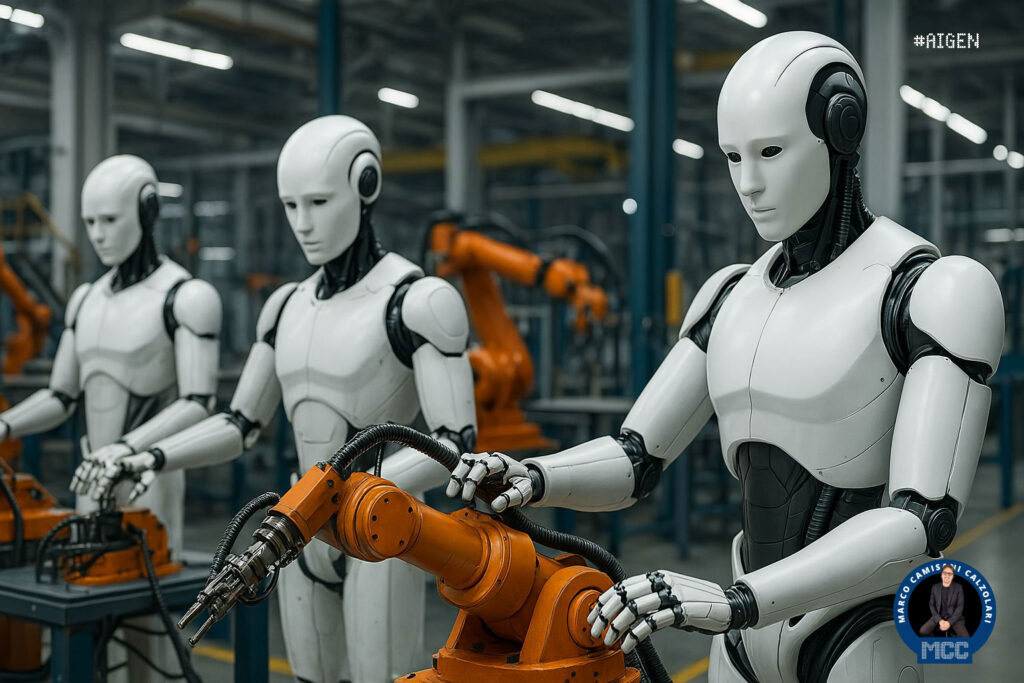
According to the latest report from Future Market Insights, the industrial robotics market—currently worth about $55 billion—is projected to skyrocket to $296 billion by 2035. That’s not just impressive. It’s telling. Because behind those numbers are more than just machines welding or assembling. There’s a deep transformation of the way we work.
More and more industries are automating entire production lines. Some do it to boost productivity. Others just to survive in an ultra-competitive market. What’s striking is the speed: robots are getting smarter, faster, easier to program, trained to adapt and work alongside humans. These aren’t just robotic arms locked in steel cages anymore. They’re silent, powerful, collaborative co-workers.
And it’s not just about cutting costs. Industrial robots don’t call in sick, don’t strike, don’t get tired. A tempting offer for any business owner. But at what cost? Every automated line often means one less human job. Or at best, a job that evolves—requiring new skills, new responsibilities.
This transition is already happening. The real question is: are we helping people navigate this shift… or just leaving them behind?